(Watch video at https://youtu.be/uoAkTCa75zg)
On April 21, 2025, after
celebrating Easter Sunday for the last time, Pope Francis passed away from a
stroke that led to heart failure. This occurred after his lengthy battle with
double pneumonia and other health issues in the preceding months. On May 8,
2025, Pope Leo XIV was elected as the new pope of the Roman Catholic Church.
Born Robert Francis Prevost, Pope Leo XIV became the first pope from the United
States.
There is an interesting prophecy about the 112 popes of the
Catholic Church, revealed by Saint Malachy more than eight hundred years ago.
According to Saint Malachy’s Prophecy of the Popes, Pope Francis was the 112th
pope and the last one before “the end” would come. Now that a new pope has
been elected, does this mean Saint Malachy’s prophecy was incorrect, or what
does the prophecy really mean?
Here is the answer and explanation regarding Saint Malachy’s Prophecy of
the 112 Popes.
1. The Prophecy of 112 Popes by
Saint Malachy
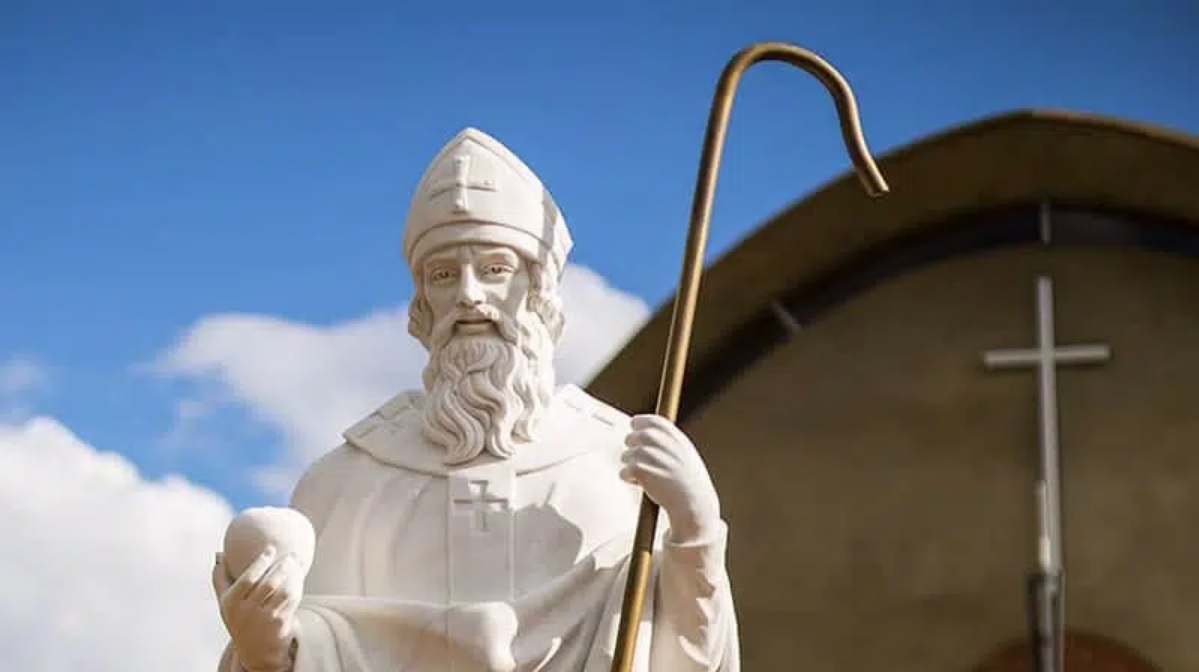
Saint Malachy was born in 1094 at Armagh, Ireland and died on November 2, 1148. He is an Irish saint who was Archbishop of Armagh in the 12th century. Saint Malachy was known as a spiritual healer and seer who performed some supernatural miracles and saw the vision of 112 Popes in the future. He was canonized in 1190 by Pope Clement III as the first Irish saint to be canonized.
While in Rome in 1139, Saint Malachy received a vision showing him all the Popes from his day to the end of time. He wrote poetic descriptions of each of the pontiffs and presented the complete manuscript to Pope Innocent
II. But at that time, no one understood the prophetic meaning of theses descriptions, so the manuscript was placed into the Vatican Secret Archives and was forgotten until 1590.
In 1590, a Benedictine monk named Arnold de Wyon discovered
the manuscript of Saint Malachy’s Prophecy and became fascinated by its
predictions of future popes. After carefully studying the prophecies concerning
the popes from 1143 to 1590, he found that Malachy’s predictions had
accurately described a distinctive trait or characteristic of each previous
pope.
He then published Saint Malachy’s Prophecy of the 112
Popes, beginning with Pope Celestine II (elected in 1143). This list extends
from the time of Saint Malachy to the present, including recent popes such as
John Paul II, Pope Benedict XVI, and Pope Francis.
Here are the prophetic mottos for some of the popes over the
last 900 years:
The Motto of the First Pope: “An Inhabitant of Tifernum”—Pope
Celestine II (1143–1144)
Pope Celestine II was born in Città di Castello (formerly
known as Tifernum Tiberinum) on the banks of the Tiber River. He was therefore
“an inhabitant of Tifernum.” Elected as the Pope on September 26, 1143,
succeeding Pope Innocent II, his papacy lasted only five months till he died on
March 8, 1144.
The Motto of the Second Pope: “Of the Caccianemici family”
(Enemy Expelled) — Pope Lucius II (1144–1145)
Pope Lucius II was born Gherardo Caccianemici dall’Orso. He was elected as
the Pope on March 9, 1144. The motto refers to his family name. In Italian, “cacciare”
means “to drive out” and “nemici” means “enemies.” In September
1144, the Roman Senate rebelled against the Pope, expelled the papal prefects,
and established the Commune of Rome. In February 1145, Pope Lucius II led a
small army to confront the Senate but was injured in the fighting and died
shortly afterward.
Here are the Mottos of the last three Popes in Saint Malachy’s Prophecy of the Popes:
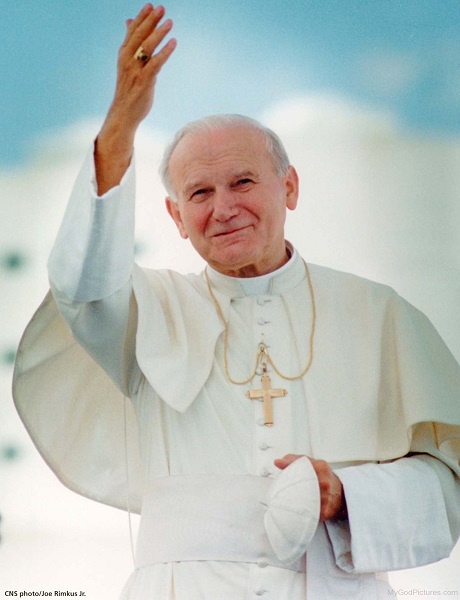 |
The Motto of the 110th Pope:
"The Labor/Eclipse of the Sun"
- Pope John Paul II (1978-2005)
Pope John Paul
II was born on May 18, 1920, on the day of a solar eclipse, and his funeral also took place on the day of a solar
eclipse on April 8,2005.
Pope John Paul
II worked like the sun circling the earth in his evangelical travels
around the world. And he brought the light of Christ, “the Sun of Righteousness” (Malachi 4:2), to the former Communist countries in Eastern European and the former Soviet Union, which eventually led to the collapse of the Communist countries in Europe and the end of the Cold War.
|
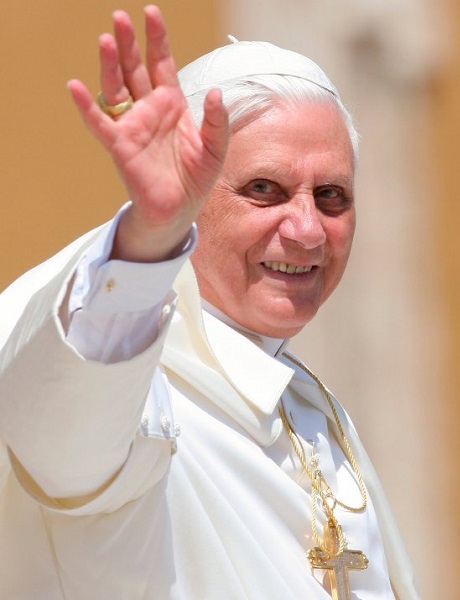 |
The Motto of the 111th Pope:
"The Glory of the Olive"
- Pope Benedict XVI (2005-2013)
Pope Benedict
XVI took his papal name from St. Benedict. The saint’s monastic order
included the Olivetans, also known as the Order of Our Lady of Mount
Olivet. In Matthew 24-25, Mark 13, and Luke 21 of the Bible, Jesus
delivered His famous Olivet Discourse on the end times on the Mount of
Olives. The motto “The Glory of the Olive” is therefore also
referred to the teaching of Jesus Christ.
Before being elected as the Pope in 2005, Joseph Aloisius Ratzinger had been the Dean of the College of Cardinals and the Prefect of the Congregation for the Doctrine of the Faith since 1981. He has been described as "the main intellectual force in the Church" since the mid-1980s. His teaching and leadership brought the Church back to traditional Catholic doctrine and values.
|
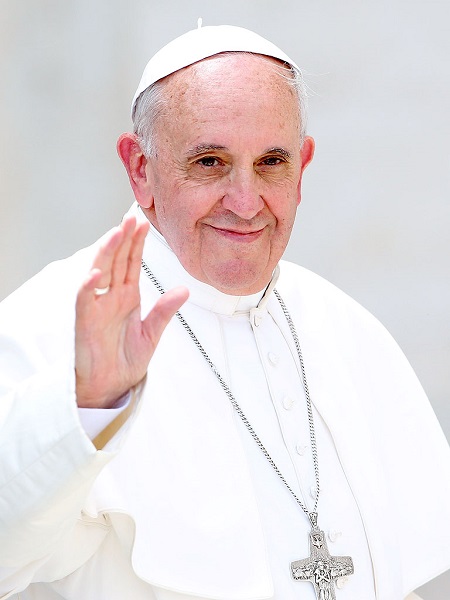 |
The Motto of the 112th Pope: Peter the Roman
- Pope Francis (2013 – 2025)
“In the final persecution of the Holy Roman Church, there will sit Peter the Roman, who will pasture his sheep in many tribulations, and when these things are finished, the city of seven hills [i.e. Rome] will be destroyed, and the dreadful judge will judge his people. The
End.”
Jorge Mario
Bergoglio was born in Argentina to a family of Italian immigrants. His
father was an Italian accountant who immigrated to Argentina in 1929 to
escape the fascist rule of Benito Mussolini. His mother was born in
Buenos Aires to a family of northern Italian descent. Therefore, Pope
Francis does have an Italian bloodline or Roman bloodline.
|
2. Pope Francis and “Peter the Roman”–the Last Pope In Saint Malachy’s Prophecy
On March 13 2013,
Cardinal Jorge Mario Bergoglio, Archbishop of Buenos Aires, was elected pope of
the Catholic Church. He chose the papal name Francis in honor of Saint Francis
of Assisi.
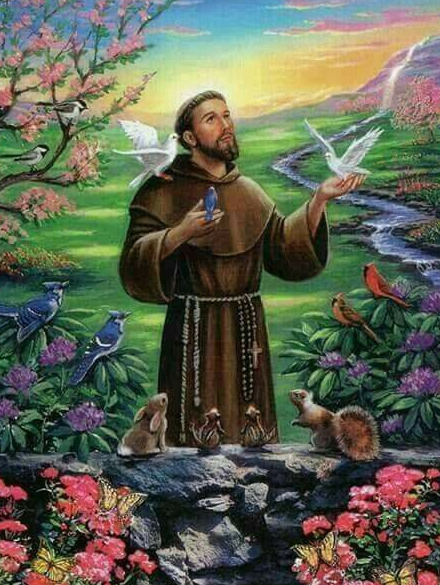
Saint Francis of Assisi (Italian: Francesco d'Assisi; c. 1181 – 3 October 1226), was an Italian Catholic friar, the founder of the Franciscan Order, and one of the most venerated figures in Christianity. His birth name was Giovanni di Pietro di Bernardone, and his father’s name was Pietro di Bernardone dei Moriconi. Both names contained “Pietro”, which means
Peter. On 18 June 1939, Pope Pius XII named Francis a joint Patron Saint of Italy along with Catherine of Siena, which made him literally the Patron
Saint of Rome. Therefore, Saint
Francis of Assisi could literally be considered as “Peter the Roman”.
Saint Francis of Assisi was known for his charity work for the poor, the rapprochement with the Muslim world, and great love for the animals and natural environment since he considered them all as the creation of God. On 29 November 1979, Pope John Paul II declared Francis the Patron Saint of Ecology, or Patron Saint of Environment and Animals.
In the last two thousand
years, Pope Francis is the first and only pope to choose Francis as his papal
name. He has followed in the footsteps of Saint Francis of Assisi by caring for
the poor, advocating for environmental preservation, and promoting interfaith
dialogue. Through this spiritual connection to Saint Francis of Assisi and his
own Italian (Roman) bloodline, Pope Francis fulfills the prophecy of “Petrus
Romanus”, Peter the Roman, as the Last Pope in Saint Malachy’s prophecy.
3. The Prophetic Meaning of Peter – From Peter the Apostle to Peter the Roman
In Chapter 16 of the Gospel of Matthew, Jesus asked his disciples, “Who do people say the Son of Man is?” They replied, “Some say John the Baptist; others say Elijah; and still others, Jeremiah or one of the prophets.” “But what about you?” he asked Peter. “Who do you say I am?” Simon Peter answered, “You are the Messiah/Christ, the Son of the living God.”
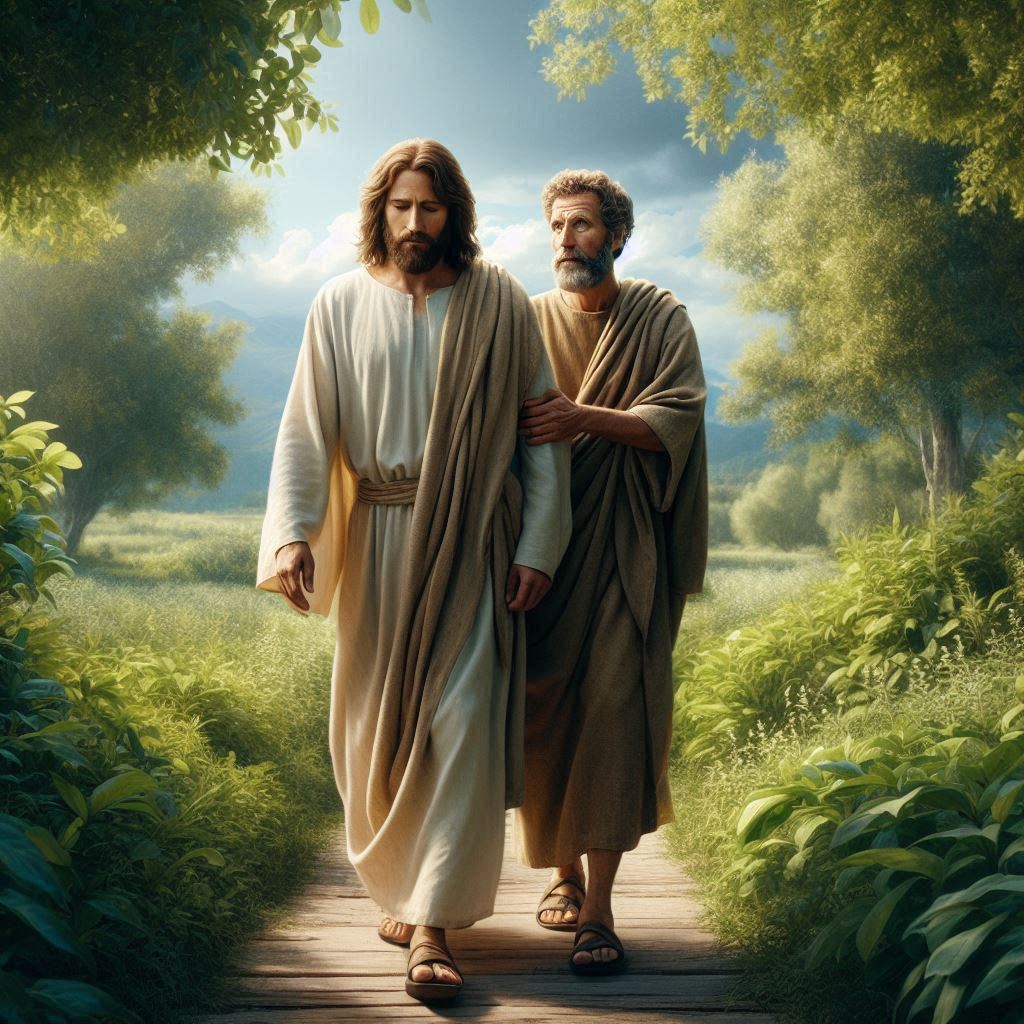
Then Jesus replied, “Blessed are you, Simon son of Jonah, for this was not revealed to you by flesh and blood, but by my Father in heaven. And I tell you that you are Peter, and on this rock I will build my church, and the gates of Hades will not overcome it. I will give you the keys of the kingdom of heaven; whatever you bind on earth will be bound in heaven, and whatever you loose on earth will be loosed in
heaven.” (Matthew 16:13-19)
That is the authority Jesus Christ gave to Peter the Apostle
to establish His Church on earth for all Christians. After the crucifixion and
resurrection of Jesus Christ, Peter led the other apostles in preaching the
Gospel throughout the Roman Empire. He established the first Christian church in
Rome, the capital of the Roman Empire, as well as the first church in Antioch.
For this reason, Peter is regarded as the first Bishop of Rome and the first
Pope. In this sense, Peter the Apostle was actually the first “Peter the
Roman” in the papal lineage of the Roman Catholic Church.
In the Catholic tradition, the Pope is recognized as the “Vicar
of Christ,” meaning the earthly representative of Christ. The Pope receives
the authority of Christ, passed down through the succession from Peter the
Apostle to the present day.
According to Saint Malachy’s Prophecy of the Popes, the
112th pope—“Peter the Roman”—would be the last pope of the current era.
Does this mean the Roman Catholic Church will end after Pope Francis? No. It
simply means that Pope Francis completed the chain of the papal lineage from
Peter the Apostle, the first “Peter the Roman,” to the Last Pope in the
prophecy, the last “Peter the Roman.”
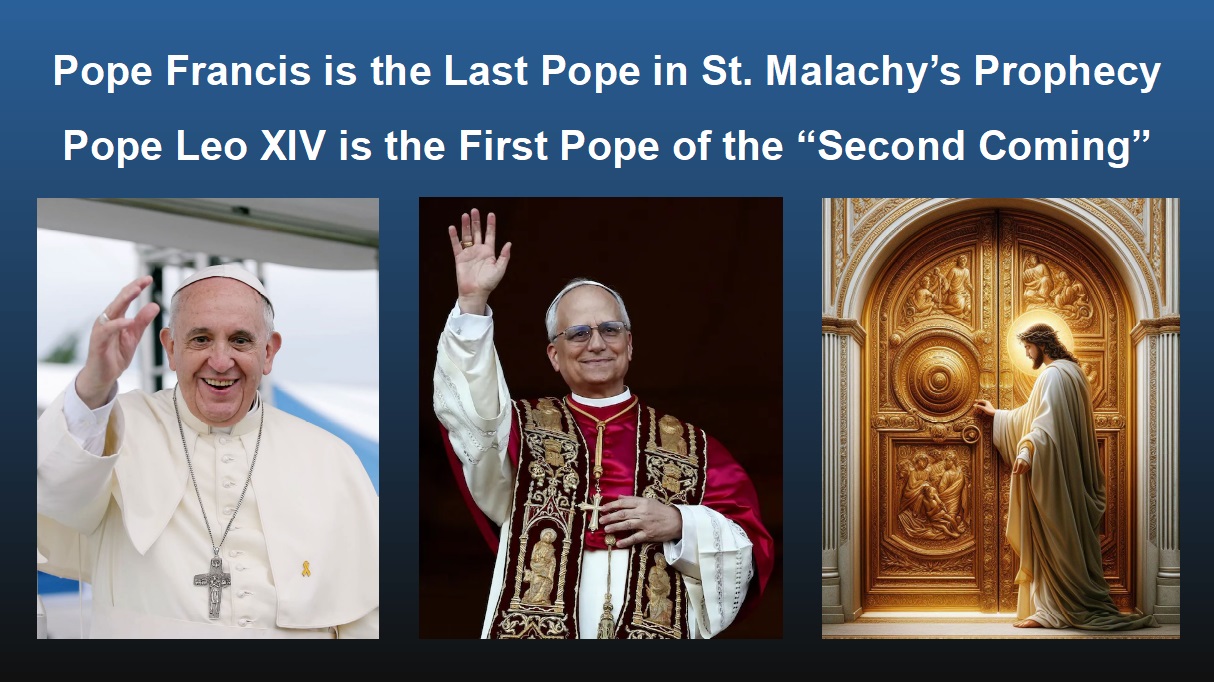
After Pope Francis passed away on April 21, 2026, a new Pope, Pope Leo XIV,
was elected on the fourth ballot (round) of the 2025 papal conclave on May 8,
2025.
4. Pope Leo
XIV–the First Pope of the “Second Coming” for the New Millennium
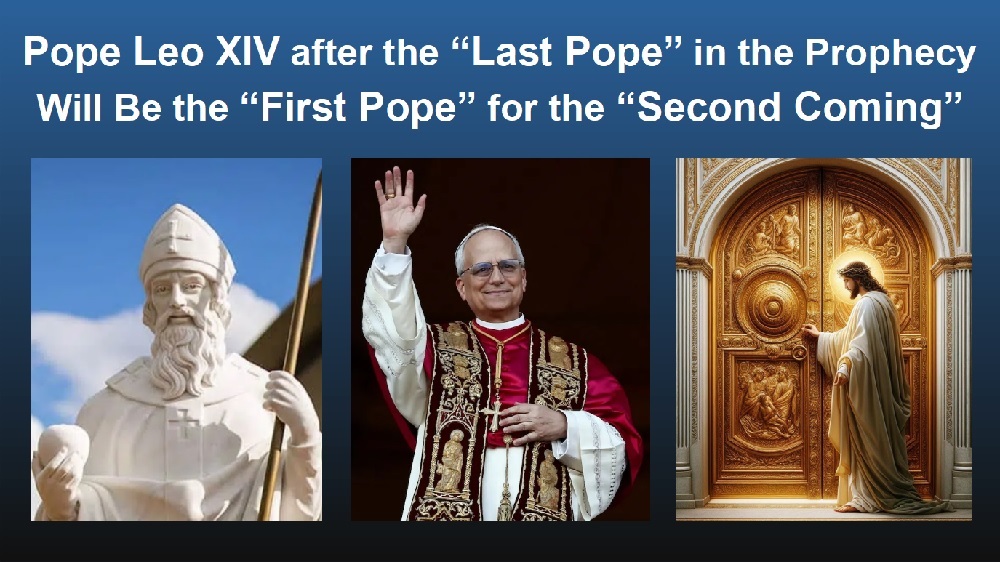
Pope Leo XIV (born Robert Francis Prevost on September 14,
1955, in Chicago, Illinois) is the 267th pope of the Catholic Church, elected on
May 8, 2025, succeeding Pope Francis. He is the first American-born Pope and the
first from the Order of Saint Augustine.
A longtime Augustinian friar, Prevost was ordained in 1982.
He spent years as a missionary in Peru, where he also gained citizenship, and
later served as prior general of the Augustinians (2001–2013). In 2014, he was
appointed bishop by Pope Francis, and then prefect of the Dicastery for Bishops
and cardinal in 2023.
Known for his administrative skill, missionary heart, and moderate approach,
Leo XIV emphasizes unity, peace, care for the poor, and Augustinian values of
community and truth. His motto is “In Illo uno unum” (“In the One
Christ, we are one”).
Apparently, Pope Leo XIV is out of Saint Malachy’s prophecy
of 112 Popes. What does that mean for Pope Leo XIV and for the Catholic Church?
At the end of Saint Malachy’s prophecy, it states that the
Last Pope “will pasture his sheep in many tribulations, and the dreadful
judge will judge his people.” This corresponds to the biblical
prophecy of the “Second Coming,” which indicates that the “Second
Coming” of the Messiah will occur during or after the Last Pope in Saint
Malachy’s prophecy has completed his mission on earth.
When the Messiah of the “Second Coming” arrives, the old apostolic
lineage of the “First Coming”—from Peter the Apostle, the first “Peter
the Roman”, to Pope Francis, the last “Peter the Roman”—will come to an
end. Therefore, Pope Leo XIV will be the First Pope of the “Second Coming”
for the New Millennium, if he is willing to accept the New Revelation of the “Eternal
Gospel” for “every nation, tribe, language and people,” as
prophesied in Revelation (14:6). This New Revelation of the “Eternal Gospel”
will be the third testament of the Holy Bible Trilogy—the New Millennium
Testament—for people to “reign with Christ a thousand years”, as
prophesied in the Bible’s Book of Revelation (Revelation 20:4).
5. The Fulfillment of the Messiah of the "Second
Coming" for the New Millennium
Many people expect the “Second Coming” of Christ to be a
dramatic supernatural event in which Christ descends from the sky with thousands
of angels. However, that scene occurs only in the spiritual realm and is not
visible in our physical world. The real “Second Coming” in the physical
world is the coming of the “Second Child” prophesied the Bible, that “Male
Child” born under the reign of the “Red Dragon”, as prophesied in Chapter
12 of the Book of Revelation(12:5).
In the Bible, there were two "Male Children"
prophesied to be born as the Savior or Messiah for the world. The "First
Child" was prophesied in the Book of Isaiah (9:6) in the Old Testament.
This refers to Jesus Christ in the New Testament. Then, at the end of the New
Testament, God prophesied that there would be the "Second Child" to be
born under the reign of the "Red Dragon" as described in the Book of
Revelation (12:5). This "Second Child" in the Bible would have the
"Authority of Messiah" and bring "the Salvation, the Power and
the Kingdom of God" to the world (Revelation 12:10).
Many people have thought that this “Male Child” born
under the reign of the “Red Dragon” refers to Jesus Christ in the “First
Coming” two thousand years ago. This is incorrect, because all the visions on
the scroll in the Book of Revelation are about the future events after the first
century, as the voice told John: “Come up here, and I will show you what
must take place after this.” (Revelation 4:1)
This "Second Child" in Revelation 12:5 is the
Messiah of the "Second Coming". After growing up and becoming
spiritually awakened, he will come forth as the "Rider on a White
Horse", as prophesied in Revelation 19:11. Just as Jesus Christ, the “First
Child” in the Bible, brought the New Testament of God to the world, the
Messiah of the “Second Coming”—the “Second Child” in the Bible—will
also bring forth the New Millennium Testament, the "Eternal Gospel"
for the New Millennium, inaugurating the new Golden Era of Peace and Wisdom for
the next thousand years. (Revelation 20:1-5).
However, unlike the supernatural phenomenon of Christ
descending from the sky with thousand of angels as most people have anticipated
for the past two thousand years, the real Messiah of the “Second Coming”
will arrive as a humble man knocking at people’s doors, just as Jesus stated
in the letter to the church in Philadelphia: "Here I am! I stand at the
door and knock. If anyone hears my voice and opens the door, I will come in and
eat with him, and he with me." (Revelation 3:20)
Now, the main question is: when you hear the knock at your
door, would you open the door to let Him in? As Jesus warned in his Olivet
Discourse in Matthew 24, there would be many false prophets and false christs
coming in His name before the true Messiah arrives. Jesus’ warning has proven
true, as many false prophets and false messiahs have appeared in the last
several decades. The key to distinguishing the true Messiah from all the false
prophets and false Christs is the Book of Revelation. Only the “Second
Child” in the Bible—the true Messiah of the “Second Coming”—holds the
key to decoding the 2,000-year mystery of the Book of Revelation. As stated
in Revelation 5 that “no one in heaven or on earth or under the earth could
open the scroll or even look inside it” except the Lamb, it is the
exclusive authority of the Messiah of the “Second Coming” to decode the
visions on the scroll.
6. New Revelation of the Messiah of the “Second Coming”
for the Catholic Church
As prophesied in the Book of Revelation, this "Second
Child" in the Bible would have the "Authority of Messiah"
(Revelation 12:10) to "rule all nations with the iron scepter"
(Revelation 12:5 & 19:11-16). Actually, this authority to "rule all
nations with the iron scepter" has been prophesied three times in the
Book of Revelation. The last two instances appear in Revelation 12:5 &
19:16, referring to the Messiah of the “Second Coming”—at his birth and at
his final coming out. The first reference is found in the letter to the church
in Thyatira in Chapter 2 of the Book of Revelation (2:26-27).
The letter to the church in Thyatira carries a specific
prophetic meaning concerning the thousand-year period of papal authority in
Christian history, from the 6th century to the 16th century. Because of the
strong faith, devotion, and great works of Pope Gregory the Great—one of the
greatest popes in the Catholic history, also known as the Father of the Medieval
Papacy—God granted him authority to rule over all matters in the Christian
world, “the iron scepter to rule all nations” (Revelation 2:26-27).
This authority to govern the Christian world in both
religious and secular affairs was passed down to subsequent popes of the
Catholic Church for the next thousand years, until the Church fell into the sins
of greed, corruption, and sexual immorality at the end of the Medieval period.
Then, God inspired the Protestant Reformation as prophesied in Chapter 7 of the
Book of Revelation. The Catholic Church lost its authority over secular matters,
and the Pope’s authority became limited to the Church itself.
Currently, attendance at Catholic churches is declining
worldwide, and many historic churches in Europe stand empty or have been
converted into tourist attractions. At the same time, the Beast of the
Antichrist “was given power to wage war against the saints and to conquer
them. And it was given authority over every tribe, people, language and nation,”
as prophesied in Revelation(13:7).
Over the past decade, more than one hundred thousand
Christians have been massacred in Africa and in the Middle East because of their
faith in Christ. Hundred of Christian/Catholic churches have been attacked by
arson and vandalism across Europe, including the renowned Cathedral of
Notre-Dame. In certain traditionally Christian countries, even preaching the
gospel of Jesus Christ is considered offensive and a hate crime. All these
incidents are the attacks by the Antichrist, seeking to persecute Christians and
eradicate Christianity along with Western Civilization.
The Catholic Church is the eldest brother among all Christian
denominations. Should the Catholic Church fail to rise in defense of
Christianity against the Antichrist’s assaults, it will face devastating
consequences, just as it endured during the French Revolution two hundred years
ago. While Pope Leo XIV has shown admirable love and compassion in his efforts for world peace and unity, he should also fulfill his solemn duty as Pontiff: to safeguard the Church and Christianity from the assaults by the Antichrist.
Now, as the Messiah of the “Second Coming” has already come with the New
Revelation of the “Eternal Gospel” for the New Millennium, this
"Eternal Gospel" will be the foundation for
the New Millennium of Peace & Wisdom, as prophesied in Revelation 20:1-5.
Since Pope
Francis was the Last Pope in Saint Malachy's prophecy about the old apostolic lineage from the “First Coming,”
Pope Leo XIV will be the First Pope to inaugurate the new apostolic lineage from the
“Second Coming” for the New Millennium. It is time for the Catholic Church
to launch a new Revival and Reformation through the New Revelation of the
Eternal Gospel from the Messiah of the “Second Coming” for the New
Millennium.
(Watch the video at https://youtu.be/uoAkTCa75zg)
Download the PDF
of this article here.