II. The History of Russia and Ukraine
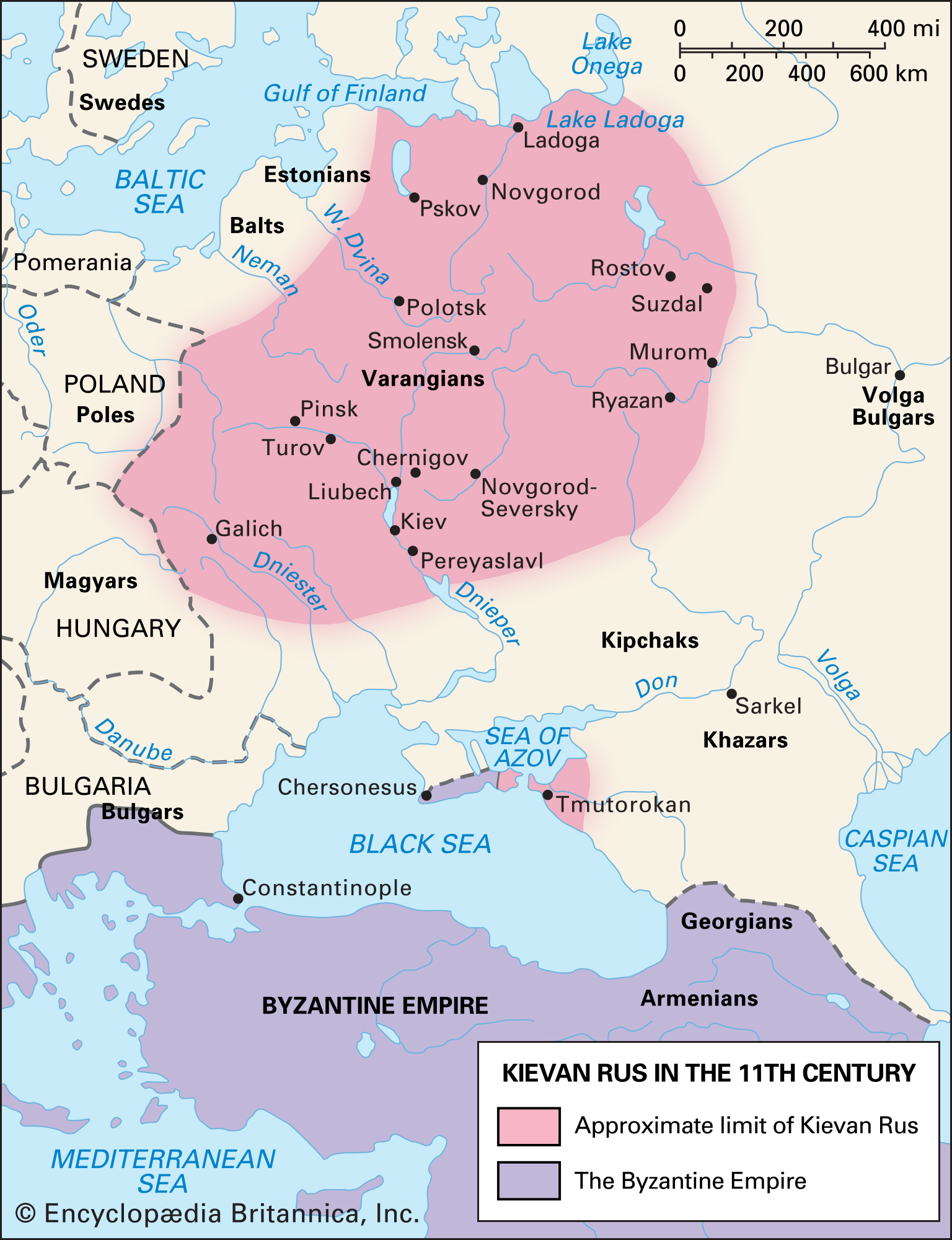
Russians and Ukrainians were once brotherly nations sharing the same ancestors. During the first millennium, Slavic tribes settled across the East European Plain, stretching from the Black Sea to the Baltic Sea. In the 8th century, migrants from Scandinavia — known as Varangians or Vikings — expanded into Eastern Europe and established the medieval state of Kievan Rus’. Its original capital was Novgorod, before it moved to Kiev in 882 AD. Kievan Rus’ became the common ancestor of modern-day Russia, Belarus, and Ukraine.
In the 10th century, Vladimir the Great rose to power and formed an alliance with the Byzantine Empire. He led the conversion of Kievan Rus’ to Christianity and introduced Byzantine culture to the region. The fusion of Byzantine and Slavic cultures ushered in a Golden Age of cultural and economic prosperity for Kievan
Rus’.
In the 13th century, the Mongol army invaded and conquered Kievan Rus’, destroying many cities. The capital, Kiev, was completely razed in 1240. The remaining principalities of Kievan Rus’ submitted to the Mongol Empire, specifically the Khanate of the Golden Horde (1240–1480).
In the 15th century, the Grand Duchy of Moscow grew from a vassal state of the Golden Horde (1263–1480) into
the Sovereign State of Muscovy with Moscow as its capital (1480-1547). During the 15th-17th
centuries, most of present-day Ukraine, including Kiev, became part of the Polish-Lithuanian Commonwealth,
while Crimea and the southeast coast of Ukraine remained under the control of
the Crimean Khanate.
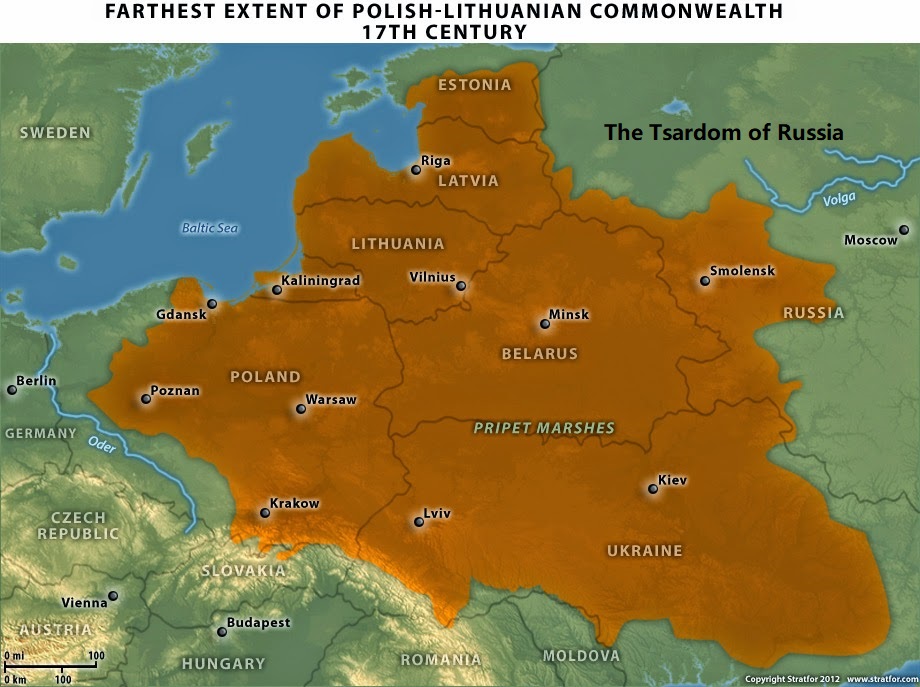
In the 16th-17th Centuries, the Polish-Lithuanian Commonwealth
controlled a vast territory that included present-day Poland, Lithuania, Latvia, Estonia, Belarus, and
Western and Central Ukraine. Meanwhile the Crimean Khanate occupied southern and
eastern Ukraine, including Crimea.
In 1648, the Cossack of Ukraine rebelled against the Polish-Lithuanian Commonwealth. With the help from Russia, they took Eastern Ukraine to join Russia in 1686. During the 17th-18th
centuries, the Russian Empire defeated the Polish-Lithuanian Commonwealth and gradually acquired
vast territory in Eastern Europe, stretching from the Black Sea to the Baltic Sea. By the end of the 18th century, most of Ukraine
had become part of the Russian Empire, except for its western regions, which remained under Austrian control.
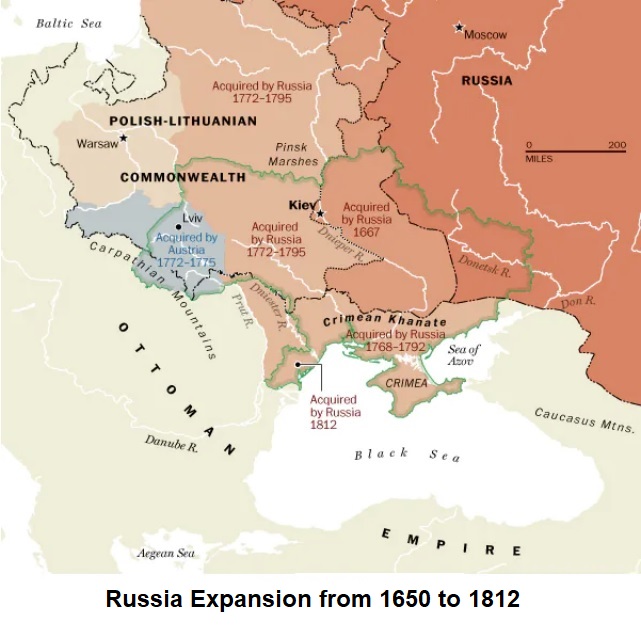
After the Bolshevik Revolution in 1917 and the
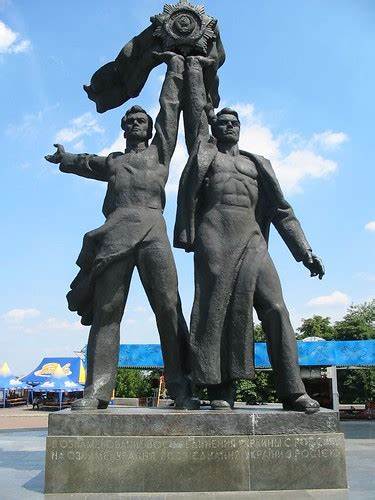
Ukrainian War of Independence (1918 - 1922), Ukraine became part of the Soviet Union. In World War II, Russians and Ukrainians fought side by side
to defeat Nazi Germany and forged a strong
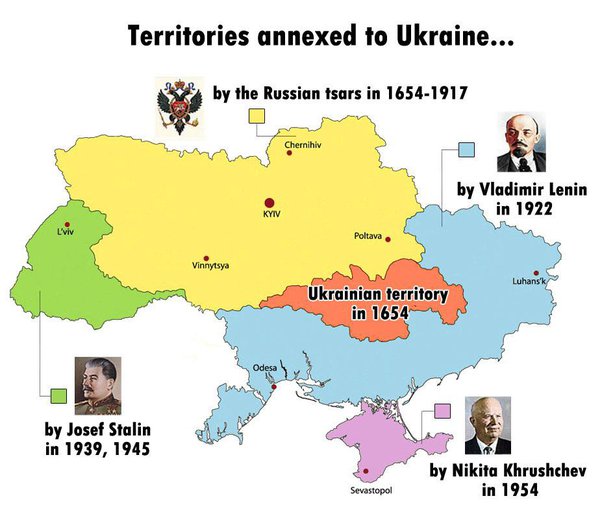
brotherhood between the two nations. Many prominent Soviet leaders came from Ukraine, most notably Nikita Khrushchev (leader of the Soviet Union from 1953 to 1964) and Leonid Brezhnev (leader from 1964 to 1982). During the Soviet era, Lenin, Stalin, and Khrushchev transferred various territories to Ukraine, with the most notable being Crimea, which Khrushchev granted to Ukraine in 1954.
Following the dissolution of the Soviet Union in 1991, Ukraine became an independent state after a nationwide referendum in December 1991. It initially maintained friendly relations with Russia. Ukraine allowed the Russian Navy’s Black Sea Fleet to remain stationed in Crimea and voluntarily gave up its nuclear arsenal by signing the Treaty on the Non-Proliferation of Nuclear Weapons and the Budapest Memorandum on Security
Assurances in December 1994. In exchange for security guarantees from Russia, the United States, the United Kingdom, China, and France, Ukraine transferred all its nuclear warheads to Russia for dismantling, becoming a non-nuclear nation. At the time it relinquished these weapons, Ukraine possessed the world’s third-largest nuclear arsenal.
Had Ukraine retained some of its nuclear weapons, Russia might not have been able to invade in February 2022. Similarly, if the five nuclear powers that signed the Budapest Memorandum had honored their pledges to protect Ukraine from foreign aggression, this war might never have occurred.
After gaining independence from the dissolved Soviet Union, widespread corruption among government officials led Ukraine into economic stagnation. This discontent triggered the Euromaidan Revolution in 2014. In November 2013, Ukrainians began mass protests in Kyiv’s Maidan Square after President Viktor Yanukovych suddenly backed out of an association agreement with the European Union. In February 2014, the protests escalated into the Revolution of Dignity (also known as the Euromaidan Revolution), which ousted the pro-Russian President Yanukovych. He fled to Russia shortly afterward.
The Euromaidan Revolution deepened the divide between pro-Western Ukrainians and pro-Russian ethnic Russians, ultimately leading to Russia’s annexation of Crimea and the separatist movements in Donetsk and Luhansk in eastern Ukraine.
III. The Causes of Conflicts between Russia and Ukraine
I | II
| III | IV
The Divine Revelation on the Peaceful Solution to End the War in the Middle East
God Bless!